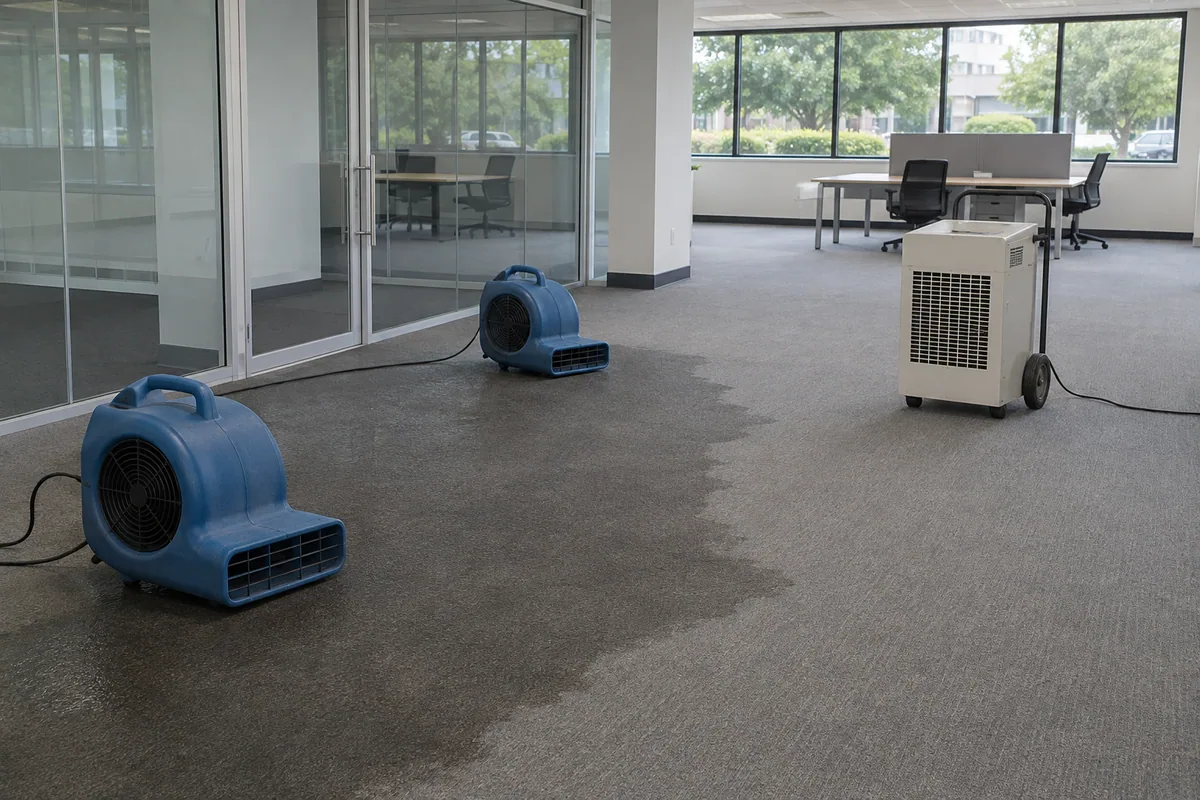
Give the water damage a clear scope.
A commercial enquiry often starts with more information than a household leak: drawings, a site contact, a rectification programme and several contractors. Start with the current problem. Is water still arriving, has bulk water been removed, or is the concern moisture left inside the building?
Describe the affected materials and occupied areas. Carpet tiles, wall linings, insulation, timber framing and joinery can need different decisions. A drying enquiry should establish which parts need assessment before equipment or reinstatement is agreed.
Fit the work around the property.
Tell us about access hours, loading, lifts, security requirements and any occupied spaces next to the affected area. Identify who can authorise access and scope changes. These details matter when planning attendance and equipment placement.
For builders approaching handover, explain the next construction stage and the current programme. A handover date is useful context, but it cannot establish whether a concealed material is ready to close up. Agree on how progress will be assessed.
Keep source rectification and drying connected.
A plumber, roofer or building contractor may already be repairing the entry point. Share the relevant findings and timing so the drying discussion reflects the status of that work. Equipment should not be treated as a repair for an ongoing leak.
Where water has tracked along a wall and slab junction or into framing, ask about moisture assessment and access to the concealed materials. Specialist cavity methods, hazardous-material concerns and any treatment requirements need to be scoped for the actual building.
Ask for records that answer the next question.
The site manager may need an explanation of the affected areas, the proposed work, progress observations and remaining limitations. Ask what records can be provided and which specialist reports need another qualified professional.
Send the suburb, property type, affected rooms and the best site contact to begin. Confirm availability, commercial terms and the proposed scope directly before treating an enquiry as a scheduled job.
Frequently asked questions
Can a builder enquire before practical completion?
Yes. Describe the water ingress, source rectification, affected materials, current construction stage and site access. The next step depends on assessment and availability.
Can a shop or office stay open while drying?
That depends on safety, contamination, access, noise, equipment placement and the affected area. Discuss occupancy with the relevant professionals before assuming business can continue as usual.
Do you provide a building defect or engineering certification?
Do not assume that a restoration scope includes defect diagnosis, engineering advice or certification. Ask which records can be provided and which assessments require another qualified specialist.
Related guides.
Find local information.
Explore commercial water damage enquiries by area. Confirm the available service and attendance directly with the team.