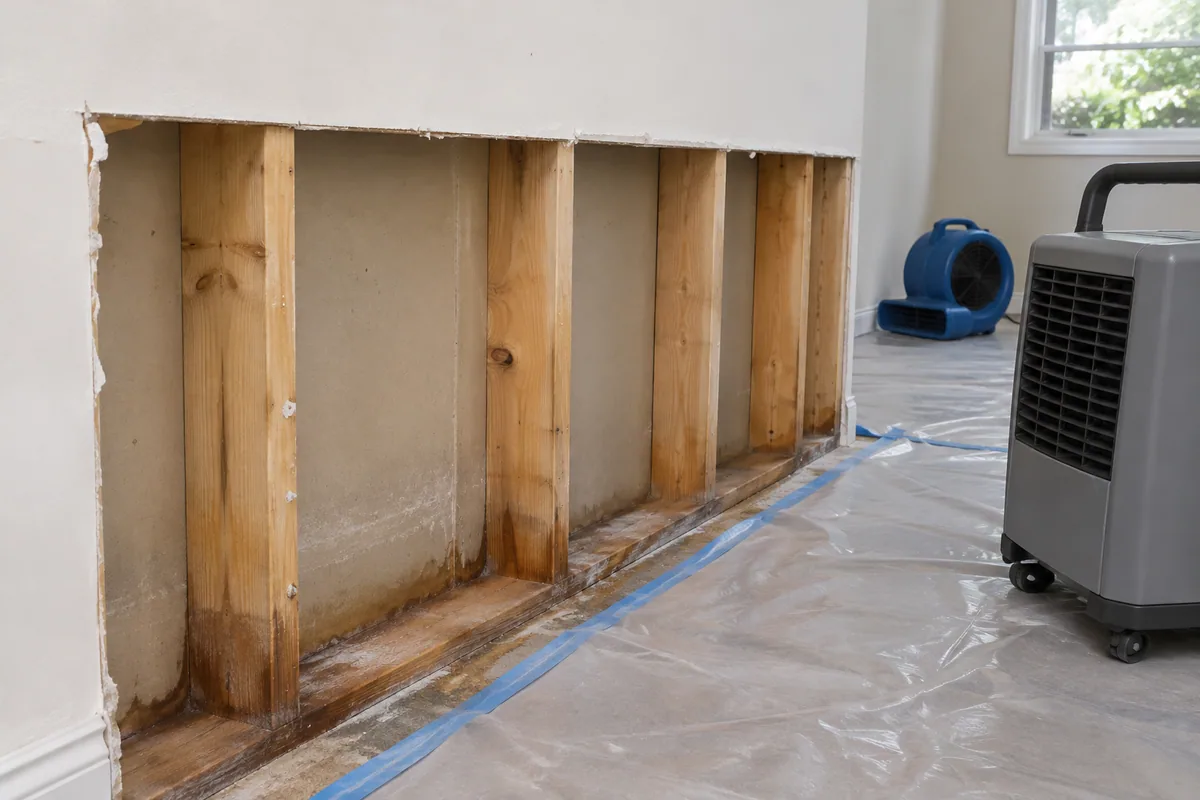
Find the extent before choosing equipment.
Explain the water source, affected rooms and whether any areas have already been opened. Moisture assessment helps identify which materials and spaces need attention.
Visible inspection and suitable moisture checks inform the drying scope. An image or a dry-looking wall by itself cannot confirm what is happening behind it.
Match the setup to the material.
Air movement and dehumidification play different roles. Equipment placement, access and room conditions matter. Ceiling cavities, walls, underlay and floors may require different treatment or material removal.
Ask how progress will be reviewed and what would change the plan. A useful explanation covers the affected area, the drying approach and the conditions for follow-on work.
Know what happens when drying finishes.
Drying and repair are separate decisions. Before finishes go back, ask which areas were checked, what observations were recorded and whether another trade needs to resolve the source. Keep those records with any repair or insurance paperwork.
Frequently asked questions
What is the difference between an air mover and a dehumidifier?
An air mover circulates air across materials. A dehumidifier removes moisture from the air. They are often considered together as part of a drying setup, depending on the assessment.
Can you dry a ceiling cavity?
A ceiling cavity needs a safety and moisture assessment before deciding on access, affected insulation and a suitable drying approach. Do not enter an unsafe roof space yourself.
Can you give a drying time from photos?
Photos help explain the visible problem, but cannot establish moisture throughout materials. A useful estimate needs assessment and review as drying progresses.
Find local information.
Explore structural drying enquiries by area. Confirm the available service and attendance directly with the team.