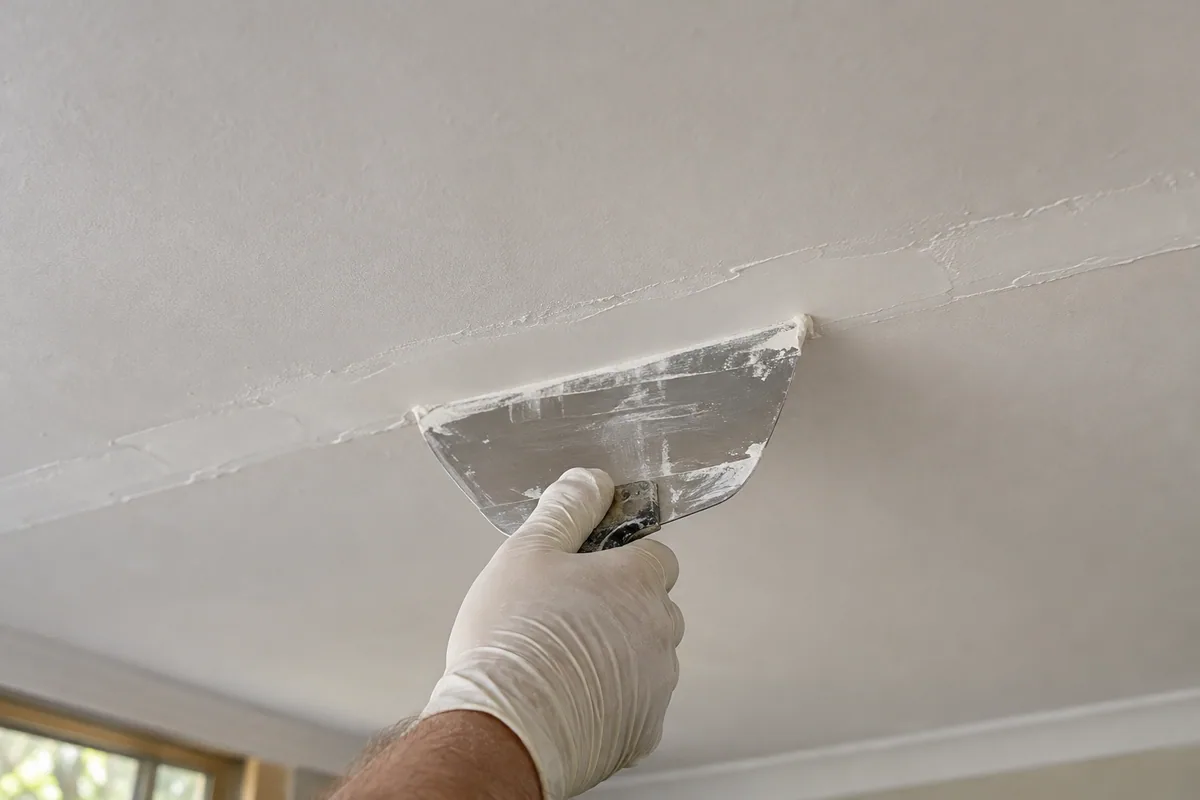
Resolve the cause before covering the mark.
The restoration and repair scope needs to account for the roof, plumbing or other source of water. A ceiling finish cannot fix an ongoing leak.
Where electrical, structural or other specialist work is needed, the appropriate qualified trade needs to assess that part of the job. Ask who is responsible for each stage.
Agree on what will be reinstated.
A repair scope may include affected plaster, insulation, joints, cornices, painting and surrounding finishes. The extent depends on the material condition, access and moisture assessment.
Discuss whether the repair is a local patch or a larger reinstatement, how it meets surrounding surfaces and what preparation is included. Clear scope notes are more useful than a vague promise to make it look new.
Keep the sequence straightforward.
Make safe comes first, followed by affected-material cleanup and drying where required. Repairs and decoration follow the relevant assessments. Keep the agreed scope and any changes in writing so there is a clear record for everyone involved.
Frequently asked questions
Can a water stain just be painted over?
First establish that the source has been resolved and the affected material is suitable for repair. Painting alone does not deal with an active leak or moisture within the ceiling.
Can you price a ceiling repair from one photo?
A photo can start the conversation. The scope may also depend on access, material condition, the area above the ceiling and work by other trades, so an assessment may be needed.
Do repairs include insurance approval?
Insurance decisions belong to your insurer. Confirm the restoration and repair scope, who can authorise work, and any documentation requirements directly with the relevant parties.
Find local information.
Explore ceiling repairs enquiries by area. Confirm the available service and attendance directly with the team.