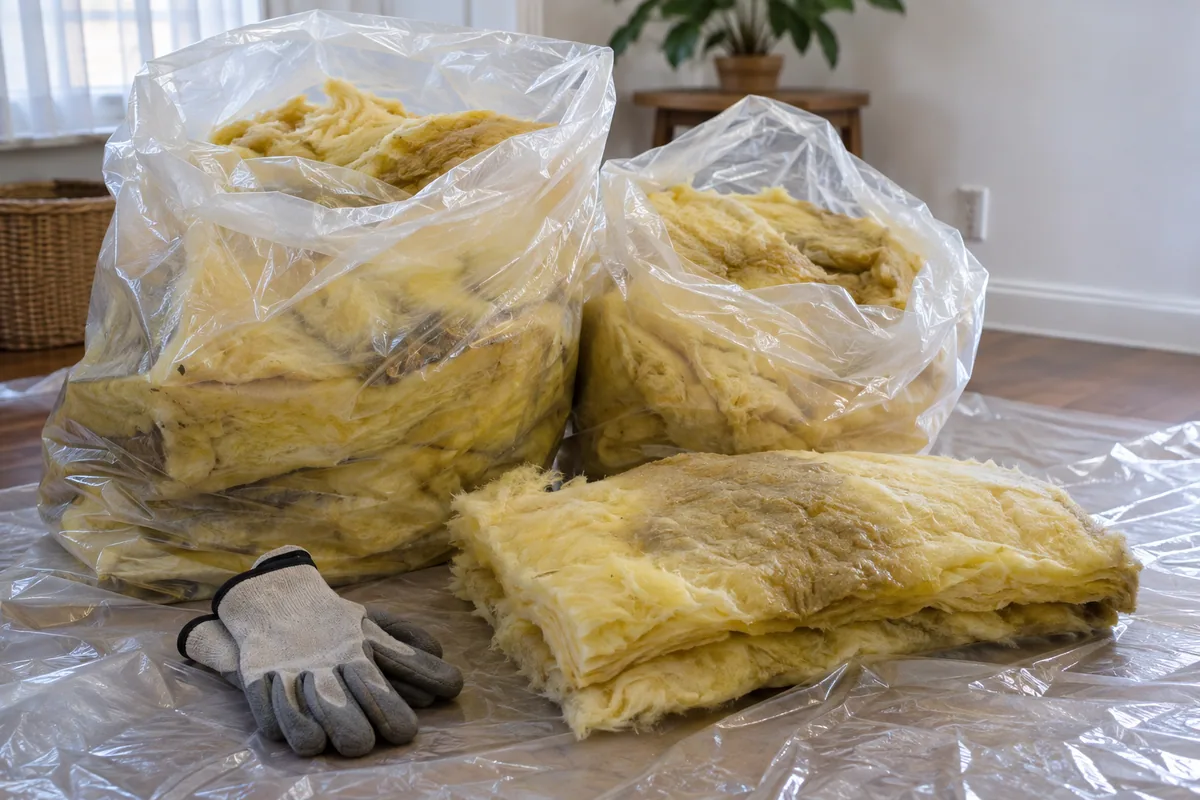
The ceiling space comes with its own hazards.
Do not enter a damaged roof space or disturb unknown materials. Electrical fittings, unstable ceiling sheets and potentially hazardous building materials need appropriate assessment.
Tell us whether the roof or plumbing leak has been addressed and whether the ceiling is sagging or has already fallen. This helps establish what other specialists may need to attend.
Decide what needs removal and what needs drying.
Insulation type, saturation, contamination and access affect the scope. A plan may include removal of affected material, cavity cleanup and drying of surrounding building materials.
Replacement should follow source repair and the appropriate assessment of the cavity. Ask what will be checked before the space is closed again.
Look beyond the patch on the ceiling.
A visible water mark does not always show the full wet area above it. The assessment should consider where water travelled and any adjacent insulation or framing that needs attention. Keep photos and scope notes with the repair record.
Frequently asked questions
Can wet ceiling insulation be left to dry?
There is no universal answer. The insulation type, condition, contamination and surrounding structure need to be assessed. Ask for the reasoning behind a removal or drying recommendation.
Should insulation be replaced before ceiling repairs?
The correct sequence depends on the source, safety and drying scope. Do not close the ceiling until the relevant conditions have been assessed.
Is this a DIY removal job?
A damaged ceiling space may contain electrical, structural or hazardous-material risks. Arrange a suitable assessment instead of entering or disturbing unknown materials yourself.
Find local information.
Explore wet insulation removal enquiries by area. Confirm the available service and attendance directly with the team.