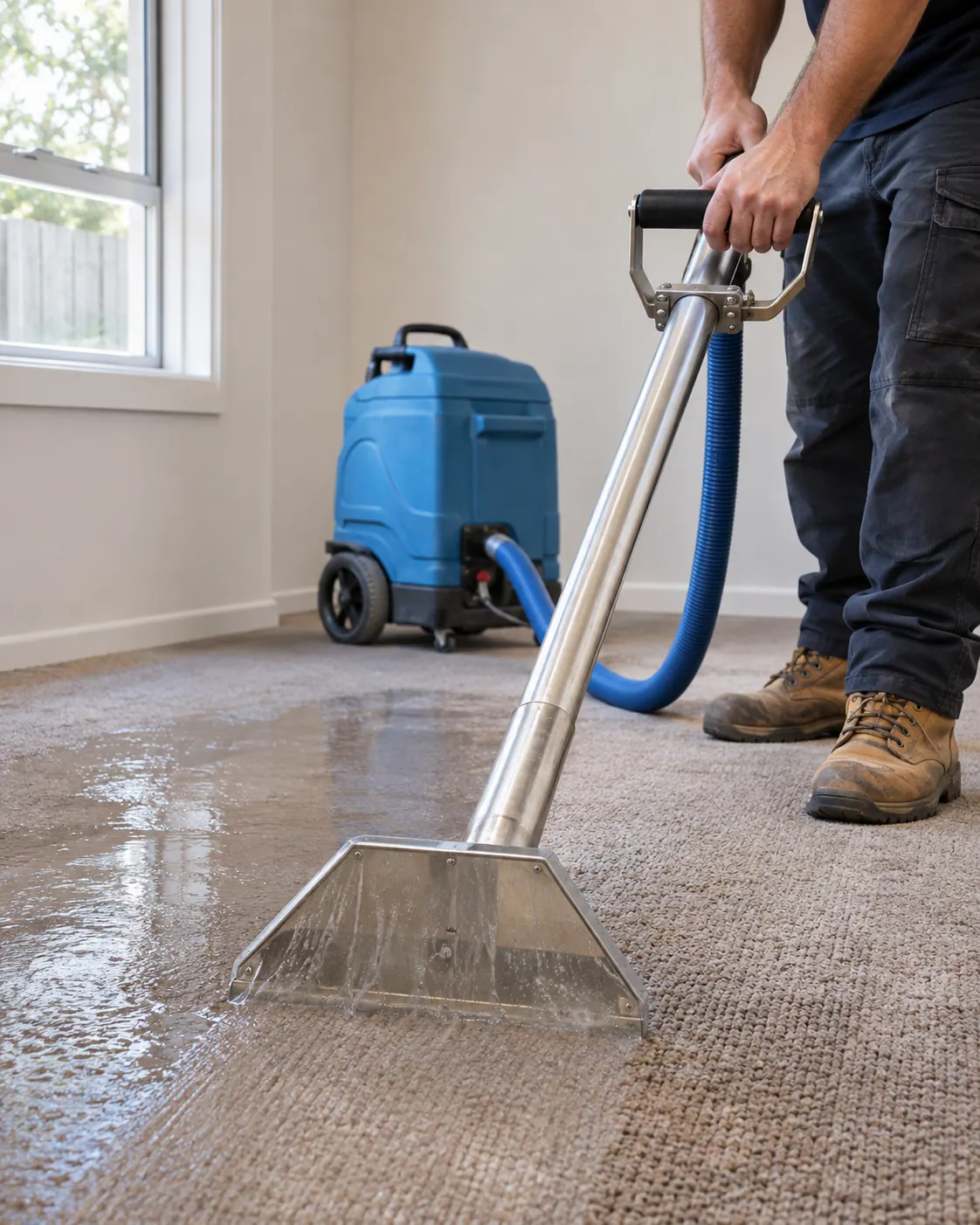
Describe where the water travelled.
Tell the team which rooms were wet, where the source was and whether water reached walls, doorways or the level below. Mention any prior extraction or cleaning visit.
Even if the visible puddle has gone, water may remain in different layers. An assessment can consider the carpet, backing, underlay and adjacent materials rather than relying on how one patch feels.
Ask whether retaining the underlay is appropriate.
The source, contamination, material condition and duration of wetting influence whether a material is suitable to dry. There is no useful universal promise that every underlay can be saved.
Ask why the proposed scope retains or removes particular layers. If water may be contaminated, avoid handling or lifting the affected materials yourself.
Understand what extraction has completed.
Bulk water extraction and drying are separate parts of restoration. Removing water from the carpet can be an important step without establishing that the underlay or floor is ready for normal use.
If you are hiring equipment, explain whether extraction has already taken place. Ask about suitability, setup, electrical safety and how progress will be checked.
Use evidence to plan the finish.
A dry-feeling surface, a pleasant fragrance or a fixed hire period does not establish every material condition. Ask what has been checked and what limitations remain before the carpet is relaid or the room is closed up.
Report persistent dampness, odour, staining or changes around skirtings. These observations help the next discussion, but they should not be used to diagnose the full problem without assessment.
For flood and electrical safety information
Follow emergency-service directions. For immediate danger, call 000. See NSW SES flood guidance and NSW Health household safety advice.